Showing posts with label CSO. Show all posts

Friday, March 13, 2026

Season Announcement Season

It's that time of year, and I will try post at least some analysis of orchestral seasons across the country and how they are doing repertory-wise, that is, dead white guys versus the rest of the world.

A preliminary note that the Chicago Symphony Orchestra Classical Series is a disgrace: the season has works by 8 9 living composers, mostly guys, mostly white. They are Michael Abels, Mason Bates, Tan Dun, Philip Glass, Magnus Lindberg, Arvo Pärt, Esa-Pekka Salonen, Roberto Sierra, and Julia Wolfe. The rest of the season is dead white men, except for a short work by Fanny Mendelssohn-Hensel, which I missed the other day.

Karina Canellakis and Jane Glover are the only women who are conducting. 

You can see all of the details on the handy CSO season grid. I wish every orchestra published a document like this!

Wednesday, September 17, 2025

It's Official.


My SFCV article updating SF* orchestra personnel for 2025-26 noted that Timothy Higgins was "on leave" from San Francisco Symphony, because no announcement had been made by the CSO about his appointment.

Now there's a press release and, as you can see from the above, he's on their website. With Christopher Bassett on leave and back in the St. Louis Symphony Orchestra, and Nick Platoff's resignation (he's now the principal at Houston), the SFS trombone section is currently down to Paul Welcomer.

Higgins might return to SFS at the end of the season. The labor settlement undoubtedly make SFS more attractive than it was, say a week ago, and the weather is better here. But the cost of living is higher than in Chicago and they've got a new music director coming in, one who has a reputation for working very respectfully with musicians, while who knows who will get the appointment in SF.


Sunday, April 07, 2024

Klaus Mäkelä, Here and There


Klaus Mäkelä leading the Oslo Philharmonic
Photo copyright Marco Borggreve
courtesy of Mäkelä's web site

There's been an enormous amount of ink spilled in the last few days over the appointment of Klaus Mäkelä, 28, to the post of music director for the Chicago Symphony Orchestra, starting with the 2027-28 season. He is currently the music director of the Orchestre de Paris and the Oslo Philharmonic, posts he will leave before the 2027-28 season. 

He is also the incoming music director of the Concertgebouw. So, in three years, at 31, he'll be leading two of the world's great orchestras.

I've got two objections to this, one of which might or might not be connected to his age:

  • Nobody should be the music director of more than one major orchestra.
  • He was....good, not great, in his single appearance at San Francisco Symphony.
As to the first point above, I've been saying this for a few years. Big organizations deserve the more or less full attention of their music directors, who in the United States are responsible for working with the artistic administrator on programming, leading a substantial number of concerts, building the orchestra, both through consistent work with them and through hiring new musicians*, working with the board and administration on publicity and fundraising, and ideally being involved with the local community in some ways. 

That last item is complicated: it might entail working with youth orchestras, working with young musicians, bringing the orchestra or a subset of the musicians out into the community, and so on. Conductors really do vary a lot in how much they do this. Locally, the late Michael Morgan, conductor of the Oakland Symphony for decades, was the exemplar, not Esa-Pekka Salonen, not MTT, not Herbert Blomstedt at San Francisco Symphony. I understand that Gustavo Dudamel, who came out of Venezuela's Sistema, has done a lot of community-oriented work in LA.

And I realize that a conductor can lead just one orchestra and still not be around as much as you'd like. Salonen isn't the music director anywhere except SFS, but he teaches conducting at the Colburn School in LA (possibly putting a lot of mileage on the Prius I see parked in his spot in Lake Louise). In a typical year he has guest conducting engagements all over the United States and in Europe.

It'd be interesting to ask the Metropolitan Opera how it worked out when James Levine was the music director of the Boston Symphony Orchestra as well as the Met - okay, we know his health problems had a lot to do with his problems at both organizations - and how it's working out now to have YN-S at the Met, the Philadelphia Orchestra, and the Orchestre Métropolitain in Montreal. Not that I think you'll get an honest answer, if there are any issues. And neither the BSO nor the Leipzig Gewandhaus will tell you whether it's a problem that Andris Nelsons is the music director of both.

But, you know, there is a gigantic pool of conducting talent out there. I know this because of the great performances I've heard the last few years just at SFS, from conductors as diverse as Dalia Stasevska, Elim Chan, Giancarlo Guerrero, Ruth Reinhardt, Nathalie Stutzmann, Krzysztof Urbański, Susanna Mälkki, Osmo Vänskä, and, of course, MTT and Salonen. Elsewhere, I've heard excellent work from Cristian Macerlaru at the Cabrillo Festival and Mirga Gražinytė-Tyla in SF with the City of Birmingham Symphony Orchestra.

As to the second - well, see the above. All of the conductors I list have been more memorable and interesting than Mäkelä, who has gotten mixed reviews from Joshua Kosman, Alex Ross, and (on record) David Allen. Balancing this, he got a great review from Justin Davidson for a recent Carnegie Hall program with the Orchestre de Paris. I trust the ears and judgement of all of these writers, and also my own. 

Certainly there's room for growth for every young musician. The LA Phil has a history of hiring surprisingly young and untried conductors, including Zubin Mehta, Gustavo Dudamel, and Esa-Pekka Salonen. By and large those were good appointments, in different ways. Maybe Mäkelä will be as good as Salonen one of these days, and I note that I have friends who still wince at some of Salonen's work in the, uh, core Germanic repertory in the 1990s. (His Beethoven here has been spectacularly good.)

Here are various Mäkelä-related articles that I've read over the last week and even earlier:

Wednesday, April 03, 2024

Music Director Updates, Shocking and Not

Yes, it's true, I have not yet posted about the terrible news from my local orchestra, the San Francisco Symphony, whose Board and CEO foolishly did not bend over backwards to retain Esa-Pekka Salonen as music director. I swear I'll get to it this weekend.

New news:
  • Esa-Pekka Salonen to leave the San Francisco Symphony when his contract expires at the end of 2024-25.
  • Klaus Mäkelä will be the next music director of the Chicago Symphony Orchestra WTF. As we know, every 28-year-old conductor should be in charge of two of the world's great orchestras plus a couple more that aren't quite on that level. I'll have more to say about this, too.
  • Jaap van Zweden will be the new music director of the Radio France Philharmonic Orchestra from mid-2026. (Maybe he didn't really leave the New York Philharmonic to spend more time with his family; he is also the music director of the Seoul Philharmonic.)

Open positions:

  • San Francisco Symphony
  • Phoenix Symphony
  • Cleveland Orchestra, as of June, 2027.
  • Paris Opera is currently without a music director.
  • Nashville Symphony, when Giancarlo Guerrero leaves.
  • Deutsche Oper Berlin, when Donald Runnicles leaves.
  • Hallé Orchestra, when Mark Elder leaves.
  • Rottedam Philharmonic, when Lahav Shani leaves.
  • Los Angeles Philharmonic, as of 2026-27, when Gustavo Dudamel leaves for NY.
  • Sarasota Orchestra, following the death of Bramwell Tovey.
  • Seattle Symphony, following Thomas Dausgaard's abrupt departure in January, 2022.
  • Chicago Symphony Orchestra, where Riccardo Muti left at the end of 2022-23.
  • Cincinnati Symphony Orchestra: open in 2024 when Louis Langree steps down.
  • Hong Kong Philharmonic, when Jaap van Zweden leaves in 2024.
  • Oakland Symphony, owing to the death of Michael Morgan in August, 2021.
  • Teatro Regio Turin: Open now with departure of Gianandrea Noseda. The Teatro Regio has not named a new music director.
  • Minnesota Opera: Michael Christie has left. MO has not named a new music director. 
  • Marin Symphony, at the end of 2022-23.
  • Vienna Staatsoper, when Philippe Jordan leaves at the end of 2025.
Conductors looking for jobs (that is, as of the near future, or now, they do not have a posting). The big mystery, to me, is why an orchestra hasn't snapped up Susanna Mälkki. Slightly lesser mystery: Henrik Nanasi, whose superb Cosi fan tutte is still lingering in my ears.
  • Esa-Pekka Salonen, if he wants such a position again
  • Tito Muñoz 
  • Andrey Boreyko
  • Osmo Vänskä
  • Susanna Mälkki, who left the Helsinki Philharmonic at the end of 2022-23.
  • MGT (apparently does not want a full-time job, as of early 2022)
  • Miguel Harth-Bedoya (seems settled in at Baylor)
  • Lionel Bringuier
  • Sian Edwards
  • Ingo Metzmacher
  • Jac van Steen
  • Mark Wigglesworth
  • Peter Oundjian
  • Ilan Volkov
  • Aleksandr Markovic
  • Lothar Koenigs
  • Henrik Nanasi
  • Philippe Jordan, eventually
  • Franz Welser-Möst, eventually
And closed:

  • Marin Alsop becomes principal guest conductor of the Philadelphia Orchestra, I believe succeeding Nathalie Stutzmann.
  • Simon Rattle becomes principal guest conductor of the Czech Philharonic.
  • John Storgards will becomes chief conductor of the Turku Philharmonic.
  • Update and correction: San Francisco Chamber Orchestra was unable to hire Cosette Justo Valdés. Instead, Jory Fankuchen, a violinist in the orchestra, has been named Principal Conductor and will lead this season's programs.
  • Indianapolis Symphony hires Jun Markel, effective September 1, 2024.
  • Andris Nelsons renewed his contract with the Boston Symphony. He's now on an evergreen rolling contract, which will continue as long as he and the orchestra are happy with each other. MTT had one of these at SFS.
  • Shanghai Symphony, with the appointment of Long Yu.
  • Virginia Symphony, with the appointment of Eric Jacobsen.
  • Warsaw Philharmonic, with the appointment of Krzysztof Urbański.
  • Bern Symphony, with the appointment of Krzysztof Urbański.
  • Berlin State Opera, with the appointment of Christian Thielemann.
  • Dresden Philharmonic, with the appointment of Donald Runnicles.
  • New York Philharmonic, with the appointment of Gustavo Dudamel. Note that Jaap van Zweden leaves in 2024 and there will be a two-season gap before Dudamel arrives.
  • Helsinki Philharmonic: Jukka-Pekka Saraste to succeed Susanna Mälkki.
  • Staatskapelle Dresden, with the appointment of Daniele Gatti.
  • Seoul Philharmonic appoints Jaap van Zweden.
  • Royal Opera appoints Jakub Hrůša to succeed Antonio Pappano in September, 2025.


Tuesday, September 12, 2023

Mark Almond to Chicago Symphony Orchestra

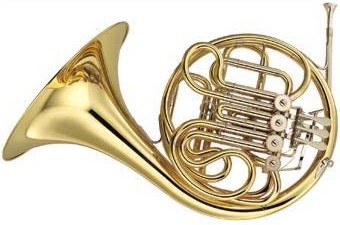
A press release from the Chicago Symphony Orchestra brings the news that San Francisco Symphony's associate principal horn, Mark Almond, is the new principal horn of the CSO.

We still don't know the results of the June auditions for SFS principal horn or who will be playing trial weeks. Keep your eyes open for the first few weeks of the season.

Saturday, January 08, 2022

Dale Clevenger

Dale Clevenger, former principal horn of the Chicago Symphony, has died at 81. He was a legendary player with a tarnished legacy, owing to his being a sexual harasser and his failure to step down in the face of  audibly diminished capabilities.

Thursday, April 16, 2020

CSO Boasts About Its Music Director's Disinterest in 20th c. and Contemporary Music

Speaking of messages from orchestras, the Chicago Symphony's latest promotional email includes this gem:


(Text in screenshot reads: Riccardo Muti, Champion of Italian Repertoire. View: One of the great benefits of having an Italian music director is that he is no more than one or two degrees of separation from great Italian composers himself. A living disciple of Arturo Toscanini through his own teacher, Antonino Votto, Riccardo Muti has conducted the CSO in many symphonic and operatic works by Italian composers of the nineteenth and twentieth centuries including Cherubini, Rossini, Verdi, Boito, Catalani, Martucci, Puccini, Mascagni, Giordano, Respighi and others.)

Wow, what a list: while Mascagni and Giordano lived into the 1940s, that's about as conservative list of Italian composers as I can think of. They're all popular opera composers, and sure, Muti is great in that repertory (although amazingly rigid about 19th c. practices such as ornamentation), but it's as though his aesthetic interest barely exists past about 1924.

What about Nono, Dallapiccola, Berio, Scelsi, Donatoni, Sciarrino, Scodanibbio, and many others?? Well - the CSO has had some of the most boring and conservative programming of any major US orchestra over the last few years, so....

Saturday, April 13, 2019

Chicago Symphony Orchestra Strike


View from the uppermost balcony
Orchestra Center, Chicago
Photo by Lisa Hirsch

Updates, 4/13/2019:

1. I forgot to link to ICSOM's press release supporting the musicians.

2. The CSO has called off concerts through April 23.

I'm late in catching up with the CSO strike, but here goes.

The core issue is the orchestra's retirement plan. At present, the musicians have what's called a defined benefit plan: you receive retirement benefits as a pension, a fixed amount annually based on years of service and perhaps your salary during your employment. I believe that pre-retirement  contributions to the plan are made by the musicians and the orchestra, but maybe don't quote me on this; it could depend on the contract, etc.

The orchestra wants to change this to a defined contribution plan, a 401(K) type plan in which contributions are made by both musicians and orchestra, but what you can draw on during retirement is a crap-shoot because you make decisions about how to invest these contributions, and there is no guaranteed payment. Worst case: you make bad decisions and you have little or nothing. The bad decisions can include not contributing enough (or at all) and making bad investment choices. You can also be the completely innocent victim of a terrible economy and lose a lot of money in a stock market crash, even if you made good investment decisions. An event like that the year before you intend to retire (or after you have retired) will affect your financial position for a long, long time.

This week, the CSO made what it calls its last, best, and final offer, which the musicians voted on and rejected last night. Here's management's statement:

Last night, the musicians of the Chicago Symphony Orchestra voted not to accept the CSOA’s last, best and final offer for a new contract and continue their strike. The CSOA shared details of that offer publicly, and we encourage you to read the news release.
We have proposed a long-term agreement that would allow the parties to repair their working relationship, bring stability to the organization, support the musicians in a transition to a new retirement benefit and grow the annual base salary by 12%, retaining a contract that remains at the top of our industry.
The Association now faces the need to review the CSO season schedule and cancel additional concerts as needed due to the musicians’ decision to continue to strike. Today, we regret to inform you that all CSOA-presented concerts and related events scheduled through Tuesday, April 23 are postponed or canceled. For details on affected concerts, please visit cso.org. We sincerely apologize for any inconvenience.
Thank you for your continued support of the Chicago Symphony Orchestra Association, and we look forward to seeing you back at Symphony Center soon.
Sincerely,
Helen Zell
Chair, Board of Trustees
                                  Jeff Alexander
President

By stability, they mean "we are limiting the orchestra's responsibility to the musicians," because defined-contribution plans shift so much retirement responsibility from institutions to individuals. 401(k) plans are pretty well understood to be useful to high-earning individuals who are savvy investors, that is, people who can afford to max out their contributions.

Me, I support the musicians. Most large US orchestras have defined-benefit (pension) plans; in the last decade, Philadelphia and Pittsburgh's musicians agreed to a two-tier system in which musicians already in the orchestras stayed in an existing pension plan, and newcomers get a 401(k). This can cost a huge amount over a player's lifetime and makes those orchestras less attractive than those with traditional pension plans. I understand that orchestra jobs are so rare that the impact on hiring may not be entirely predictable, but in the case of Philly and Pittsburgh, the musicians threw future musicians under the bus.

Now, I am something of an amateur in talking about these issues. You'll want to follow Drew McManus's reports and commentary at Adaptistration for the perspective of a real pro. This link goes to posts tagged Chicago Symphony Orchestra.

Saturday, August 26, 2017

A Visit to Chicago 1: Music Not by Berlioz


Vertigo at Orchestra Hall
Photo by me even though you're not supposed to take photos inside the theater.

I saw a couple of performances in Chicago that were not of music by Hector Berlioz, one at the Chicago Symphony and the other at Lyric Opera.

The CSO program was an enormous disappointment and left me scratching my head over the New York Philharmonic's decision-making process. Yes, it was their incoming music director, Jaap van Zweden, at the helm of orchestra. Here's the program:

  • Mozart, Masonic Funeral Music
  • Wagner, Prelude & Liebestod from Tristan und Isolde (orchestral version)
  • Brahms, A German Requiem

I've got a review coming out of van Zweden's recording of Das Rheingold one of these days - or maybe it is out already and sitting in the mail pile [it is long since published!] - and you could say I was not happy with it. Never mind the mediocre sound engineers, the extreme variability of the cast, and an orchestra that he's welcome to call great (but I won't): this is a remarkably dull Rheingold, which is about the worst you can say about any performance of anything.

This concert was of a piece with the Rheingold. Everything sounded very carefully conducted, but without much impulse or forward movement. The Wagner did not build to the expected climax; the Brahms had little weight. It's as though he is not quite sure what is important in this music. The soloists were okay, not great. I was genuinely shocked by poor ensemble playing in the orchestra, with a lot of downbeats that were just...not...together. (This happened during the Solti era as well, as Joshua Rifkin mentioned to me sometime back in the 1970s.)

Now, maybe I should have sprung for a more expensive seat. I was way the hell up in the top-level balcony, which is approximately three thousand feet from the orchestra, a steep and terrifying three thousand feet - but the box office had said the area had the best sound in the house except for the much more expensive seats a couple of levels down. Considering the cost of my Troyens tickets, yes, I certainly should have gotten the more expensive seat, especially since the seats up at the top of Orchestra Hall are horribly uncomfortable, much much worse than the seats at Bayreuth, because they are tiny, there is absolutely no legroom, and you're more or less on top of your neighbors and the people in the next row down on a very steeply rake. You bet I hung onto the rails in front of me for dear life going to and from my seat. And I wondered how the much older woman seated near me managed the stairs.

Yeah, maybe the orchestra and JvZ would have sounded better from lower down. Or maybe not. At least my back would not have hurt when I got out of the concert.

The set.
Photo courtesy of Lyric Opera of Chicago


I also took in the first performance of Massenet's Don Quichotte at LOC. Henson Keyes wrote a very positive review for Parterre Box. He's right that the performers were very, very good - although unlike Keyes, I sure hear some wobble in Furlanetto's bass - and the production is very pretty and Andrew Davis conducted well.

Clementine Margaine and Ferrucio Furlanetto
Photo courtesy of Lyric Opera of Chicago

Let me just say that the only reason to perform this opera is if you've got charismatic performers for the three main leads, because, honestly, it's not really a very good piece. Sure, it's pretty; sure, there are a few extractable arias. Yes, I'd like to hear Clementine Margaine is something more substantial; she's got a spicy and very interesting mezzo and good dramatic presence.

But overall? It's just a lot of unmemorable prettiness, like Andrea Chenier and Alfano's Cyrano.

Saturday, March 11, 2017

Census

I'll be updating this regularly as orchestras announce their seasons.

New York Philharmonic

41 composers represented. All white, all European or American.

Men: 40 Women: 1 Dead: 35 Alive: 6

Thanks to Brian Lauritzen for counting the NYPO.

Los Angeles Philharmonic

81 composers represented

50 dead, 31 living!
41 men, 9 women
1 African American, 1 Asian, several Latin American

Count by me. It's an extraordinary season in every way.

Chicago Symphony Orchestra

50 composers represented. 46 dead, 4 living 48 men, 2 women 49 white, 1 African American

Count by me.

Philadelphia Orchestra


54 composers

Men: 53
Women: 1

Dead: 43
Living: 11

White: 51
POC: 3

Works by living composers: 14
Women conducting: 1 (MGT)

San Francisco Symphony

50 composers

Men: 49
Women: 1 (Saariaho)

Dead: 43
Living: 7

White: 50
POC: 0

Works by living composers:  7
Largest number of works by a single composer: Bernstein with 9, not counting WSS film with live orchestra
Women conducting: 1 (Mälkki, who conducts the program with the Saariaho)

Count by me.

Wednesday, July 08, 2015

Moving Around

The most interesting news I've gotten this week comes from Mr. CKDH at All is Yar, who started from personnel changes at the LAPO and casually dropped in a startling fact about the Met Orchestra.

First, the good news: the LAPO has a new principal flutist, Denis Bouriakov. Bouriakov is the orchestra's fifth principal flute in the last seven years, following the departures of Mathieu Dufour, David Buck, and Julien Beaudiment. I am sure that everyone is holding their breath and hoping that he sticks, given the comings and goings.

Next, the bad news: the orchestra has announced that Michele Zukovsky, principal clarinet and an orchestra member for more than fifty years, will be retiring. She's had a fantastic career and is one of the rocks of the LAPO. I've heard her play and she was great. Hale and farewell, Michele Zukovsky! You will be missed.

And now the startling fact about the Met Orchestra: They've had four principals depart in the last couple of years. Principal clarinet Anthony McGill now holds the same position at the NYPO; principal bass Timothy Cobb also moved across the plaza to the NYPO. Now both of its principal flutes have left, Bouriakov for the LAPO and the other, Stefán Ragnar Höskuldsson, for the CSO, where he'll take the chair vacated by Mathieu Dufour, who has left for the Berlin Philharmonic.

Well, now: that the Met has serious financial problems isn't a secret, and it could be a sign of those problems that they're losing so many principals to other orchestras. It's bad news for them, in any event; that kind of churn in first chairs is not good.

Friday, February 21, 2014

Who's Next?

The New York Philharmonic is about to lose its principal clarinet - again.

Let's take a look at the sad story of that seat in the last few years:


Perhaps the NYPO should check out Burt Hara, late of the Minnesota Orchestra, currently with the LAPO, though sunny LA might be more appealing, or perhaps Mr. Hara plans on a return to Minnesota. But as I've said before, keep your hands off Carey Bell.

Tuesday, February 19, 2013

Dale Clevenger to Retire

Via All is Yar, the word comes of a press release from the Chicago Symphony Orchestra announcing the retirement of principal horn Dale Clevenger.

I have a couple of reactions to this.
  • The San Francisco Symphony had better make it worth Robert Ward's while to stick around.
  • Clevenger is taking a teaching job at Indiana University. If IU is aware of Clevenger's reputation as a harasser, really, they should read recent coverage of the Chetham's/RNCM scandals carefully.

Thursday, December 13, 2012

Personnel Matters


The Chicago Symphony Orchestra has been famous for its brass section for a good long time. Now the CSO has a problem in that brass section, as a recently-published article in the Chicago Reader makes clear: Critics in Chicago and NY have noticed that principal horn Dale Clevenger's playing isn't what it used to be. John von Rhein, Lawrence Johnson, and Andrew Patner in Chicago, and Steve Smith in NY, have all remarked on this in published reviews. Andrew Patner is quoted extensively in the Reader article.

Clevenger is a legendary player who has held his position for 44 years; he is now 69 years old. If you click through and read the Reader article and the comments to the article, you'll see that the CSO has several problems on its hands.
  • Clevenger's playing
  • Clevenger's behavior toward women, if the allegations in the comments are true
  • Clevenger's unwillingness to step down
  • Muti's unwillingness to follow the contractually-mandated process for removing Clevenger from his position
This is a sad situation all around. Knowing when it's time to quit takes a particular kind of grace; a musician has to be attuned to his or her own weaknesses, has to have the humility to listen to others, and has to be willing to call it a day. There's an old saw about quitting before people are saying it's time, when they want you to hang around for a while longer.

In San Francisco, Glenn Fischthal stepped down voluntarily several years ago as principal trumpet, finishing his career at SFS as associate principal, because he felt his skills were not what they had been. He retired at the end of the 2011-12 season because he had developed aura migraines. Now, that's grace.

It seems Dale Clevenger thinks he can recover his former skill. Any professional musicians want to weigh in on the likelihood of this? I am doubtful, given Clevenger's age (69) and the exacting demands and known difficulties of the horn.

Further, if Clevenger is a serial harasser of women, he's creating what's known legally as a hostile working environment. Should women joining the orchestra or who are already members have to deal with this? It's the job of the CSO's management to make sure its employees behave themselves.

As for Muti and other conductors: if you're not willing to deal in a forthright manner with players' declining skills, perhaps permanent guest conductor is a better job for you than Music Director. It's tough, but that's what you get paid the big bucks for.

Wednesday, March 07, 2012

Lies, Damned Lies, and Marketing

It's season announcement season, meaning it's time for orchestras and opera companies to make extravagant and entirely unsupported claims. As the press releases hit my inbox, hoo boy, the eye-rolling that ensues. In early February, here's what got me pounding the table, er, keyboard.


I am not on the CSO's press list - must remedy that! - and so I didn't realize that they had announced the 2012-13 season until Patrick said something in email about a posting to opera-l that mentioned this series.  

"OMG! Muti is bringing the world's weirdest programs to SF next week, so maybe he's taking a look at the French Wagnerians! D'Indy! Magnard! Reyer!"

No such luck. The composers under consideration are....wait for it....

Liszt, Brahms, Tchaikovsky, Dvorak, Mahler, Debussy, Berg, and Shostakovich.

Now, there's some good stuff included there: Mark Elder's programs include a couple of Dvorak tone poems, which are rarely heard in the States; Esa-Pekka Salonen conducts Act II of Tristan (be still, my heart!).

Debussy is represented by the Prelude to the Afternoon of a Faun, which I presume to be the most popular and played of his orchestral works. It's on an otherwise tasty program conducted by Le Maitre Boulez himself, and will surely be worth hearing, but buh? Clink that link and you'll see that it's likely this title was imposed as an afterthought, perhaps to take advantage of the Wagner bicentenary, rather than inspiring the programming.

The CSO has other big titles for groups of concerts, and, well, Rivers strikes me as just as artificial as The Wagner Effect.  Then there's the Solti Centenary. Take a look; what do you think?

Los Angeles Philharmonic Orchestra: Innovative

The LAPO has the nerve to call a concert or semi-staged Nozze di Figaro "part of an innovative series." No, there is nothing innovative about presenting opera in concert, especially when it's one of the most-performed works in the repertory. Get back to me, LAPO, when you're putting on Le Grand Macabre and The Cunning Little Vixen, or other genuine rarities.


Here I'm going to cheat a little and beat up on my local orchestra's current season. As you can hardly have missed, SFS is reviving the American Mavericks concept from a decade or so back. Locally, we'll be seeing five programs, three orchestral and two chamber; the orchestra then takes the Festival on tour to NYC, where the adjunct programming is even better than here.


They're truly interesting programs of music that was mostly on-the-edge at the time it was composed. Still, Copland, a maverick?


John Adams was a maverick, but with commissions coming hard and fast from institutions like SFS, LAPO, and SFO, he's now establishment. And Mason Bates? His music was being performed at Cabrillo when he was still a grad student. (Cabrillo used to have more experimental music than it does now.) With advocates like MTT and Riccardo Muti, and writing in an orchestral style somewhere between Harbison and Lindberg, he's also establishment. I wish both these composers well, don't get me wrong, and I consider Adams a great composer. But mavericks they are not.


One more point: at American Mavericks, the mavericks are mostly dead and mostly male. The exceptions are Riley, Adams, Bates, Monk, Reich, Del Tredici. This shouldn't be a surprise, as that's the case with most orchestral programming at SFS and elsewhere in the upper echelons of the orchestral world.  Hint: there's lots of experimental music being written by living composers and even by women.


[I see that Josh Kosman addresses similar issues this week in the Chron. He's right; I'll just note that I wrote most of this on February 7. I'll add a couple of names to his list of American mavericks, er, experimental composers: La Monte Young and Gordon Mumma.]