Showing posts with label BSO. Show all posts

Tuesday, August 25, 2026

News from the BSO


Boston Symphony Hall
Photo by Lisa Hirsch
April, 2025

This dropped into my in-box a few hours ago:
A Joint Statement from the BSO and Our Musicians:

The Boston Symphony Orchestra, the Boston Musicians’ Association, and the Musicians of the Boston Symphony Orchestra Reach New Collective Bargaining Agreement and Release the Following Joint Statement:

"Today, the Boston Symphony Orchestra (BSO) musicians, the Boston Musicians’ Association, the BSO trustees and management approved a new collective bargaining agreement effective through August 26, 2029. 

This agreement marks an important step toward a more collaborative future for the BSO. It creates a precedent-setting partnership between musicians and management in artistic planning and centers excellence across all the work we do on our stages and in our communities. It also establishes a truly collaborative process in the search for our next music director. 

We are one institution of musicians, staff, and boards, committed to working together in partnership to advance our artistic mission, inspire audiences, and serve Boston, the Berkshires, and beyond. We want to thank our audiences, donors, and partners for your continued support of the BSO."

For more details, read the complete press release here.

Note that the press release has quotations from Chad Smith, President and CEO, and Barbara Hostetter, Chair of the BSO Board of Trustees, but nothing from the players' committee. I would have liked to see something from them.

Thursday, April 23, 2026

Michael Tilson Thomas


Michael Tilson Thomas visits Google
November, 2008
Photo by Lisa Hirsch
(I took many photos that day, but most of them are a little blurry because MTT was perpetually in motion.)


Knowing this day would come did not make it any easier: Michael Tilson Thomas, universally known at MTT, died last night at his home in San Francisco, nearly five years after a diagnosis of glioblastoma multiforme. I am tremendously saddened by his passing and especially by his illness. I'd hoped he would have a long and happy retirement, guest conducting, composing, and dreaming up all sorts of wonderful things.

I wrote an advance obituary for NPR, commissioned the week he announced he had a brain tumor and updated many times since owing to his amazing survival. (Huge thanks to Steve Smith for commissioning the piece.)

While researching the obit, I turned up some numbers numbers that describe his sheer impact on the San Francisco Symphony, of which he was music director from 1995 to 2020:
  • He conducted around 1,800 concerts with SFS, from 1974 to 2025.
  • His first concert showed the shape of things to come: it included Mahler's 9th.
  • During his tenure, SFS presented 41 world or U.S. premieres.
  • He appointed about 60 musicians, conductors, music librarians.
  • He led festivals devoted to Beethoven, Bates, Stravinsky; Yiddish theater and its impact on Broadway and American music; the Barbary Coast; Mendelssohn and Ades; Schubert and Berg; Sofia Gubaidulina; George Benjamin; Leonard Bernstein; Russian music, and more.
  • He conceived SFSoundBox and helped found SFS Media, the orchestra's own record label, which was among the first of any U.S. orchestra. (The Louisville Orchestra, I have learned, started its own label in 1950.)
In addition to all of that, he made more than 120 recordings with a number of orchestras and was awarded 12 Grammys. 

He and his late husband, Joshua Robison, were very much a part of San Francisco, and MTT was loved throughout the city. The block of Grove that runs between Davies Symphony Hall and the War Memorial Opera House was renamed MTT Way in honor of him.


On KQED's Forum, Alexis Madrigal spoke with Mark Leno, former California state senator and longtime friend of MTT and Joshua Robison, classical music critic Joshua Kosman, composer John Adams, soprano Julia Bullock, and conductor Donato Cabrera about MTT. You can listen to the archived broadcast.

Obituaries and memorials:
Joshua Robison obituaries:

Tuesday, March 10, 2026

Major Openings


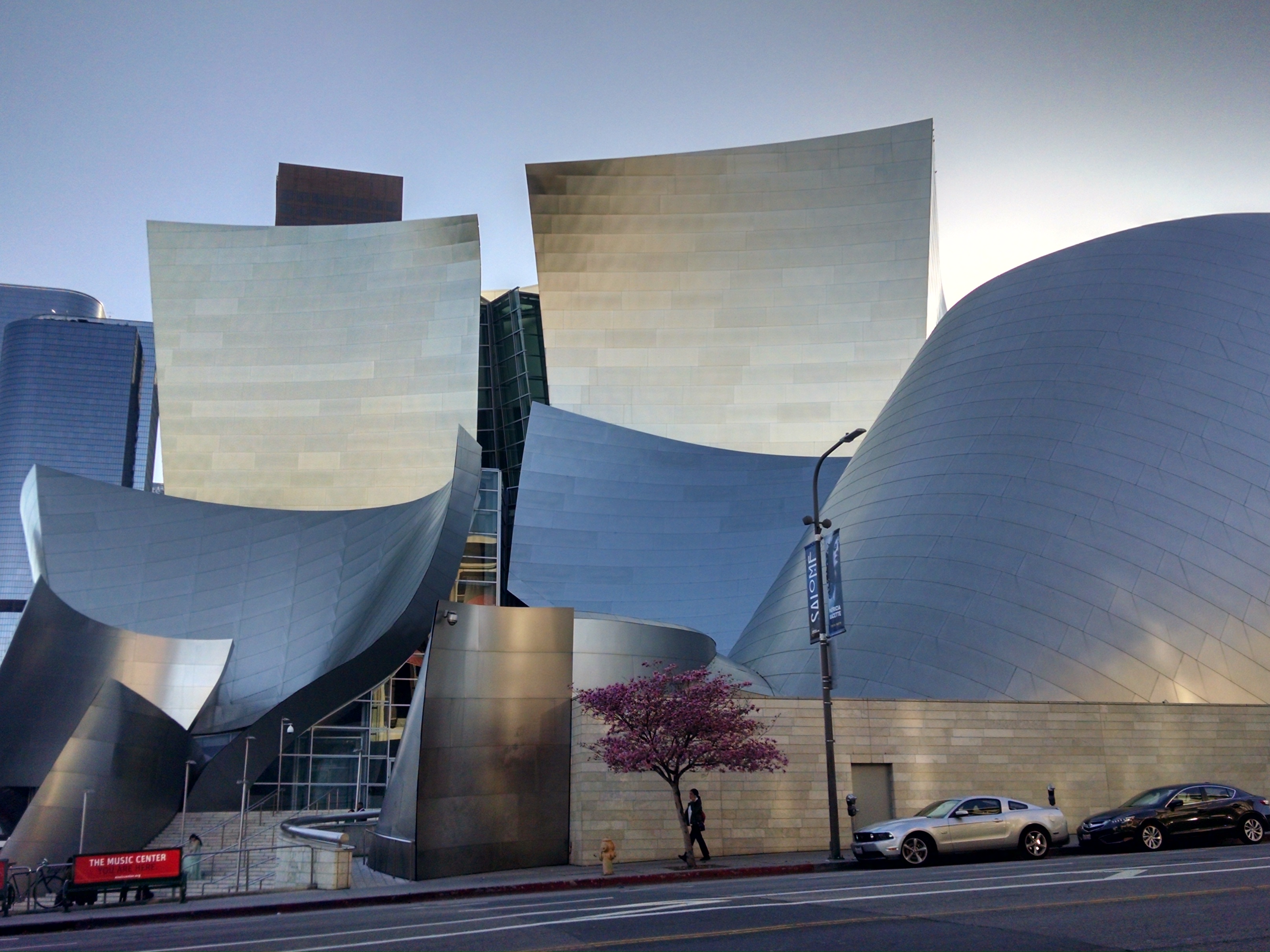
Walt Disney Concert Hall
Photo by Lisa Hirsch

I'm months overdue on a big music director update, but last week's bombshell at the Boston Symphony reminded me that four of the big-budget U.S. orchestras now have music director openings:
  • Boston Symphony, where there has been drama.
  • Cleveland Orchestra, where there has not been drama. The orchestra announced in January, 2024, that Franz Welser-Möst would leave at the end of the 2026-27 season. Three years' notice, similar to MTT's three at SFS.
  • SFS, where there has been drama, with Esa-Pekka Salonen deciding to part ways over differences with the board.
  • LA Philharmonic, where there has not been drama. Gustavo Dudamel decided to move to the NY Philharmonic in February, 2023, and commences the new position with the 2026-27 season. Well, the return of Esa-Pekka Salonen in a non-music director position could be considered dramatic and could cause some conductors to rule out the appointment, because being music director when one of the best conductors in the world – who is also one of the best composers in the world – is in the office next door could be discouraging.

Wednesday, December 04, 2024

Music Librarians, East Coast and West Coast


Tristan und Isolde full score
San Francisco Opera music library
Photo: Matthew Washburn, courtesy of San Francisco Opera

Somehow, my Boston area music-writer buddy A.Z. Madonna of the Boston Globe and I had a long-distance mind meld, resulting in two articles about music librarians in two different publications. A.Z. focussed on the music librarians of the Boston Symphony Orchestra. I spoke with Margo Kieser, principal librarian of the San Francisco Symphony, Carrie Weick, of the San Francisco Opera, and Drew Ford, of more small orchestras than I can believe. They were all wonderful to chat with and I am grateful to each of them and their organizations for their help.

When I spotted A.Z.'s article, I forwarded the link to my editors and immediately realized that I couldn't read it until I had filed my own article. I am just getting to it, so I will note that any similarities are entirely coincidental.

Here they are:


Thursday, March 21, 2024

Boston Symphony Scriabin

Found in a press release from the BSO:

The first of these (April 4–6) is a program inspired by color: it opens with Anna Clyne’s Color Field, inspired in part by the vibrancy of a Mark Rothko painting, and concludes with Alexander Scriabin’s epic Prometheus, Poem of Fire, for piano, color organ, chorus, and orchestra. Scriabin’s spectacular vision for a color organ, which bathes the performance space in colored light corresponding to the music played, will be actualized for the first time in Symphony Hall by Tony-award winning lighting designer Justin Townsend in collaboration with researcher and musicologist Anna Gawboy, Ph.D. Esteemed pianist Yefim Bronfman and the Tanglewood Festival Chorus join to bring this synesthetic work to life. Also on the program are Franz Liszt's symphonic poem Prometheus, providing an additional musical interpretation of the Greek myth, and Richard Wagner’s ecstatic Prelude and Liebestod from Tristan and Isolde, a work suffused with the sensual and one that helped expand ideas of musical time. 

So,  a color organ of some kind but no scents.

Note that this is part of a festival that also includes some Messiaen (Turangalila with Yuja Wang taking the piano part; Quartet for the End of Time with Garrick Ohlsson) and a bunch of other interesting works.

Thursday, August 10, 2023

Cast Change Announcement, Tanglewood Edition

Also COVID-19 edition. Received from the BSO:

With great regret, after testing positive for COVID-19, cellist Yo-Yo Ma must withdraw from this week’s scheduled Tanglewood appearances: today’s 2 p.m. Open Cello Workshop at Ozawa Hall as well as the open rehearsal and concert with the Boston Symphony in the Shed on Saturday, August 12, and Sunday, August 13, respectively.


Soprano Renée Fleming has graciously agreed to step in to join the BSO on Sunday, performing songs by Richard Strauss in place of the Shostakovich Cello Concerto No. 1 that was originally scheduled to be performed with Mr. Ma. The remainder of the program, under the direction of BSO Music Director Andris Nelsons, is unchanged. Saturday’s 10:30 a.m. open rehearsal will proceed with Ms. Fleming, Maestro Nelsons, and the BSO.

Click here for photos and bio of Renée Fleming


UPDATED PROGRAM DETAILS


Saturday, August 12, 2023

10:30 a.m., Shed

Open Rehearsal, BSO Sunday, August 13 program


Sunday, August 13, 2023
2:30 p.m., Shed
Boston Symphony Orchestra
Andris Nelsons, conductor
Renée Fleming, soprano

Julia ADOLPHE, Makeshift Castle

Richard STRAUSS, Songs with orchestra

STRAVINSKY, Petrushka (1947 version)


Best wishes to Mr. Ma for a swift and complete recovery. That's a nice program and the kind of thing Fleming is very good at.

Monday, May 15, 2023

More on Smith -> BSO

Photo of a complicated set of Walt Disney Concert Hall's angles, depicting intersecting curved and  pointy planes and blue sky.

Walt Disney Concert Hall
Photo by Lisa Hirsch

Friends elsewhere raised some questions about Chad Smith's impending departure from the LA Phil.

One mentioned the "short tenure" of folks at the LA Phi, which isn't actually the case:
  • Deborah Borda, 17 years
  • Chad Smith, 21 years
  • Gail Samuel, more than 30 years
He also mentioned the turnover at the top, but again, the odd item there is the very short tenure of Simon Woods, who succeeded Borda when she returned to the NY Philharmonic.

Borda's recent tenure in NY led to the renovation of their concert hall, hiring her designated successor Gary Ginstling, and hiring Gustavo Dudamel to succeed Jaap van Zweden as music director. It's an amazing conclusion to an already-outstanding career.

When Borda left LA, both Smith and Samuel were considered to be strong, capable candidates to succeed her. The Board's decision to hire Woods....was a mistake and he was gone in 18 months.

Smith succeeded Woods, and Samuel's departure from LA for the top job at the BSO makes sense because she was not going to get the LA job and presumably she wanted a shot at being CEO of a major orchesestra.

Smith's departure has to be read in context: he is from the northeast and went to school in the Boston area, receiving degrees from Tufts (history) and the New England Conservatory (voice). The BSO has the largest endowment of any U.S. orchestra (nearly a half-billion dollars). Tanglewood is important as a concert venue and for its role in training conductors and composers. The LA job is a plum, and the BSO gig is even bigger.

Another friend asked about the BSO going the LA for its CEO for the second time. What LA has had, for many years, is a strong group of administrators, given Borda, Smith, and Samuel. The same friend was wondering whether there might have been culture clash between how LA works and how the BSO works, and that is a very good question. We will probably never know the answer, because the folks with that kind of information aren't very like to talk publicly about it. The most informative article that I've seen about Samuel at the BSO came from the Berkshire Eagle and is well worth reading. Whatever mistakes and missteps Samuel made, Smith is unlikely to repeat.


Wait, What? Chad Smith to the BSO.

Photo of a building whose exterior is constructed of many small sheets of shiny silver metal connected to make huge irregular planes at different angles.

Walt Disney Concert Hall
Photo by Lisa Hirsch


A huge surprise today: Los Angeles Philharmonic chief executive Chad Smith is leaving in the fall for the Boston Symphony. Smith was the longtime artistic administrator of the LA Phil, then became CEO after the short tenure of Simon Woods, who succeeded Deborah Borda. 

Smith is filling a position most recently vacated, after only 18 months, by Gail Samuel, who had similarly been a successful executive at the LA Phil.

This leaves the LA Phil in the position of losing its CEO when they are starting the search for a new music director, pending Gustavo Dudamel's departure at the end of the 2025-26 season.

Knowing that few people are qualified to run a big, important orchestra that has a large budget: Is LA possibly going to hire Gail Samuel back, this time as CEO? Are we looking at....interim CEO Deborah Borda, because she is about to retire from the NY Phil?

Update: adding the BSO press release, after the cut.

Friday, December 16, 2022

WTF, BSO?

Surprising, well, shocking news from the Boston Symphony Orchestra: President and CEO Gail Samuel, who had only joined the orchestra 18 months ago, has resigned, as of January 3, 2023. Or maybe "resigned," since the press release gives no reason and Samuel has given no reason. Also leaving is Asadour Santourian, whom Samuels hired as VP for the Tanglewood Music Center & Learning. (H/T David Allen for finding the info about Santourian.)

What's shocking is that Samuel was a highly successful executive at the LA Philharmonic, serving under Deborah Borda, Simon Woods, and Chad Smith. After Woods left and Smith (also a highly successful exec) was appointing chief executive there, Samuel landed the BSO job upon Mark Volpe's retirement after 26 years. My money would be on "conflict with the board" as the reason for her departure, especially since Santourian is leaving simultaneously.

Jeffrey Dunn, a member of the orchestra's Board of Advisors (not the same as the Board of Trustees), has been appointed interim President and CEO.

Here's the press release about Samuel:

The Board of Trustees of the Boston Symphony Orchestra accepted the resignation of Gail Samuel, who announced today that she is stepping down as President and Chief Executive Officer.

Samuel joined the BSO in June 2021, as the organization was staging a decisive return from COVID-19 closures and cancellations during an unprecedented time in its history. Working closely with the Board, Samuel developed and implemented re-opening campaigns for each of the BSO's premier venues, Tanglewood and Symphony Hall, helping to usher in the return of live audiences and spectacular seasons of performance, with the orchestra achieving critical acclaim. During her tenure, she prioritized engaging broadly across the Boston community and making the BSO a more welcoming place for all, both on- and off-stage. These efforts included launching the Stephen and Susan Paine Resident Fellows, composers speaking from the stage about their works, a spring series of concerts around issues of social justice, and concerts outside of Symphony Hall. Simultaneously, she effectively stabilized the institution's operating budget and strengthened its financial standing.

"Gail came to the BSO as we were beginning to chart a critical course through the very consequential effects of the COVID-19 pandemic," said Barbara Hostetter, Chair, Board of Trustees, Boston Symphony Orchestra. "At a time when stabilizing the institution was of paramount priority, Gail was a steadying force. She also led the BSO through a vital turning point of generational change, setting in motion a creative vision that reflects the BSO's commitment to diversity. As a result of her expertise, broad lens and hard work, the BSO is well positioned to continue with this important progress. On behalf of the Board of Trustees, I express my gratitude to Gail and our entire executive team."

"It was an honor to lead the Boston Symphony Orchestra, one of the world's most celebrated orchestras, particularly during such a significant time in history," Samuel said. "When I arrived at the BSO, I was dedicated to re-opening Tanglewood and Symphony Hall, and to increasing creativity at the BSO by welcoming artists to our stages more broadly representing the rich diversity that exists in our city. After navigating the profoundly complicated re-opening matters and having successfully laid the groundwork for continued evolution at the BSO, I have decided to step down. The end of the season and Holiday Pops performances offer a natural time with limited disruption. I hold great pride in all that was accomplished during such a challenging time for the arts and culture sector. I am confident that the work I have done and the tools we put in place will enable future growth and diversity and enrich the BSO's rich legacy of artistry. I am grateful to the Board of Trustees, the Boston arts and cultural community, and the BSO's players and staff for the opportunity to positively impact this wonderful institution."

Samuel's tenure will conclude on January 3, 2023. She has graciously agreed to provide transition assistance and consulting to the Board as it seeks a successor. The Board of Trustees will discuss plans to begin a search for a new President and Chief Executive Officer at their January 2023 board meeting.

Press (Fanto's report in the Berkshire Eagle, is far and away the most complete, and quotes Dunn using the phrase "music is a universal language that lifts us up", so oy):


Thursday, September 01, 2022

MTT on the East Coast

Photo of Michael TIlson Thomas. He is conducting, with a baton in his right hand, making a gesture with his left. He is a gray-haired, slender man with a smile on his face.

Michael Tilson Thomas

Photo by Brandon Patoc (c), 2019
Courtesy of San Francisco Symphony


MTT visits Massachusetts, and more articles get written and more interviews take place than usual, owing to the gravity of his glioblastoma diagnosis.


Wednesday, October 06, 2021

Visa Issues

Big sigh over visa issues at the NY Phil....

Alessio Bax To Make His New York Philharmonic Debut Replacing 
Leif Ove Andsnes in Works by Clara and Robert Schumann
October 14–16, 2021, at the Rose Theater at Jazz at Lincoln Center


Pianist Alessio Bax
Photo credit: Marco Borggreve


Pianist Alessio Bax will replace Leif Ove Andsnes, who is unable to enter the United States due to visa issues. Bax will make his debut with the New York Philharmonic in these performances led by Music Director Jaap van Zweden, October 14–16, 2021. The program — featuring Clara Schumann’s Romance in A minor for solo piano, Robert Schumann’s Piano Concerto, and Brahms’s Serenade No. 2 — is unchanged. 


and at the Boston Symphony:


BOSTON SYMPHONY ORCHESTRA ANNOUNCES ARTIST CHANGE IN PROGRAMS TAKING PLACE AT SYMPHONY HALL OCTOBER 7-12 

 [Christina and Michelle Naughton]With great disappointment, Dutch pianists Lucas and Arthur Jussen have had to withdraw from their BSO performances, October 7, 8, 9, and 12, at Symphony Hall, due to unprecedented delays in the issuing of their travel visas

The program will remain the same with the Philadelphia-based Naughton sisters, Christina and Michelle, making their BSO debuts performing Mozart’s Concerto in E-flat for Two Pianos, K.365. The opening two works on the program are Strauss’s Love Scene from Feuersnot and Death and Transfiguration.

Tuesday, June 08, 2021

March, 2022, is Not That Far Away: BSO at Carnegie Hall

The Boston Symphony Orchestra just announced two performormances at Carnegie Hall in March, 2022, and hoo boy, they look great:

• The New York premiere of a new violin concerto by composer Unsuk Chin (a BSO co-commission), performed by soloist Leonidas Kavakos, paired with Ives' The Unanswered Question and Berlioz's Symphonie fantastique, on March 14 

 A concert version of Berg's opera Wozzeck, featuring Bo Skovhus in the title role and Christine Goerke as Marie, on March 15

Chin is a terrific composer, so that violin concerto is a noteworthy new work. Skovhus was sensational in Michael Jarrell's Bérénice in Paris three years ago, and I have the highest regard for Goerke. That will be a Wozzeck to remember. 

Thursday, March 25, 2021

Levine Coverage


Lincoln Center Fountain
Photo by Lisa Hirsch


The coverage of James Levine's demise is....interesting. There are a few people trying to be "fair", meaning they are trying to be "balanced" despite Levine's alleged crimes (and everything noncriminal involved with brushing his health problems under the nearest rug). 

I realize that an obituary written by a journalist as news, running in a newspaper, is supposed to assess the whole of its subject's life, but there is such a thing as soft-pedaling and there is definitely quite a bit of that around. There is lots of room for arts-related opinion pieces that really dissect Levine's career and that work to understand how he managed to stay in one of the most powerful positions in the U.S. classical music world for decades despite the rumors that swirled around him. (And why the BSO hired him to be their music director despite the rumors and his health problems.) That's the kind of thing I'd like to see more of. 

I want to note a couple of factual items that came out after the announcement of his death:

1. Levine died of natural causes. The exact cause hasn't been released, but in addition to wondering whether he'd died as the result of injuries suffered in a fall, I also wondered whether suicide was the cause.

2. In December, 2019, he married his friend? companion? life partner? Suzanne Thompson, the oboist, with whom he lived for many years. The question marks should be read in the context of his alleged fondness for underage males.

Here's a round-of of coverage of Levine's death. Note that I have not yet read all of this, so there isn't commentary on every link yet. There will be, but not until this weekend.

  • Composer, teacher, and performer Elaine Fine discusses the evolution of her thinking about musicians, in a compassionate and thoughtful way. 
  • Conductor and cellist Kenneth Woods has a scorching blog post  that tells you a lot about what kind of a person that Levine was. Unusually, I suggest reading the comments, which are informative and include an extensive comment by a long-time Met orchestra member. I have elsewhere read a report to the effect that Levine would talk to singers through an intermediary, which is weird for someone whose job it is to work with singers.
  • Joshua Kosman (SF Chron) tells you about what the reactions to Levine's death tell you about the people making the pronouncements.
  • AZ Madonna (Boston Globe) calls for the end of genius-worship. Here is Madonna's earlier call for Peter Gelb's resignation
  • Jeremy Eichler, Globe, obituary 
  • Anthony Tommasini, NY Times: obituary
  • Anthony Tommasini, NY Times: appraisal
  • NY Times: timeline of Levine's career
  • Boston Symphony, notice of Levine's passing. It is very short, and finishes with two sentences that tell the heart of the story: "The last period of his tenure as BSO music director was plagued by ill health, which resulted in his resignation in 2011. Subsequently, there emerged allegations of sexual improprieties which virtually ended his career as many musical institutions severed ties with him, including the Boston Symphony Orchestra."
  • William R. Braun, Opera News, obituary
  • Justin Davidson, vulture.com, obituary
  • Tim Page, Washington Post, obituary
  • Michael Andor Brodeur, Washington Post, appraisal
  • Guardian, obituary
  • Tom Jacobs, SFCV, appraisal, worse than soft-pedaling. He seems to be trying to excuse Levine somehow. Note the outraged comment from composer and violist Kurt Rohde.

Wednesday, March 17, 2021

Secrets, Lies, and Levine


James Levine, serial child rapist and longtime conductor / music director / artistic director at the Metropolitan Opera and Boston Symphony Orchestra, died on March 9, 2021, in Palm Springs, CA, at 77. The cause of death has not (yet) been announced. It could have been Parkinson's Disease, which Levine had for an unknown number of years, or it could have been from complications of a fall (he was injured at least twice in bad falls), or it could have been some completely unrelated issue, such as a stroke or heart attack or cancer.

You can read obituaries in the NY Times, Washington Post, and elsewhere about Levine's musical career, or you can peruse the Met annals or read reviews. I have a few, mostly non-musical, things to say.

1. He lied to the public over a very long time about his health.
2. He might have lied to the Metropolitan Opera about his health.
3. If the Met knew about his health problems, they covered for him.
4. He lied to the public about his long history of sexual abuse.
5. He presumably lied to the Met about the abuse.
6. The Met covered for him.
7. He bamboozled a lot of people, including reasonably smart journalists, into thinking that he had  been a major expander of the Met's repertory. He was not. Check the label Levine on this blog; there's a  post where I debunked this ludicrous claim. 

See the pattern? A powerful man who was financially important to a cultural institution,  and an institution ready to lie to protect him.*

If you think that the Met didn't know about the abuse, or at the very least the forty-plus years of rumors of abuse, there is a bridge I would like to sell you, and I will give you your choice of bridges, even. 

I knew about the rumors as a grad student at Stony Brook. Terry Teachout, who then lived in his home state of Missouri, knew the rumors in the 1970s. A fellow posting on Twitter a few years back said "I was a 17-year-old in LA and I knew the rumors." The parents of children in the kids' chorus at the BSO (or maybe it was Tanglewood) told their kids not to ever be alone with him. The late composer Matt Marks noted that "I knew when I was 15, and if I knew, the Met knew."

The Met knew; they covered for his health problems and they covered for the abuse. There's a lot of criminal behavior to around. With Levine gone, maybe more of the facts around Levine and the cover-ups will come out.


* See also, Domingo, Placido

Thursday, February 18, 2021

Gail Samuel to the Boston Symphony


Gail Samuel in Copley Square, Feb. 17, 2021 (Photo by Aram Boghosian)
Courtesy of the Boston Symphony Orchestra


It's just over a year since Mark Volpe's retirement from the Boston Symphony was announced, and today the BSO named his successor: Gail Samuel, who has been an executive at the LA Philharmonic for some 25 years, most recently as Chief Operating Officer. She was one of the two strong internal candidates to take over as CEO when Deborah Borda returned to the New York Philharmonic after many years at the LA Phil. (For reasons nobody could fathom, the LA Phil's Board went with an outsider, who was replaced less than two years later by Chad Smith, the other strong internal candidate.)

Mark Volpe has been a strong manager* at the BSO, which has had good labor relations and has an enormous endowment, more than $500 million.  The orchestra has had the same problems during the pandemic as every other full-time U.S. orchestra, and negotiated musician pay cuts as a result.

It's great that the BSO has named such a strong and experienced leader to this important position. Congratulations to Ms. Samuel on her new job!

More:


* Yeah, James Levine's troubled tenure as music director of the BSO owing to his health problems, I know, I know, But I don't know what the BSO knew.

Wednesday, March 18, 2020

Doriot Anthony Dwyer

Doriot Anthony Dwyer, legendary flutist, has died at 98. Dwyer was the first woman to hold a principal chair in the Boston Symphony Orchestra, a position to which she was appointed by Charles Munch in 1952. I had long assumed she was the first woman to be an orchestra principal in the U.S.; I was very surprised to see that the Chicago Symphony Orchestra appointed Helen Kotas as principal horn in 1941. The next female principal in the BSO was not appointed until 1977, so...

Dwyer was a trailblazer, very tough about how she went about negotiating the job, and held the principal flute seat until she retired in 1990. I never studied with Dwyer and never met her, but I lived in the Boston area for five years and she was a towering figure among flutists. Rest in peace, Doriot Anthony Dwyer; you were a hero to so many young women who played the flute.

Saturday, February 01, 2020

Mark Volpe Retiring from the Boston Symphony

This is big news: Mark Volpe, who has been President and CEO of the Boston Symphony Orchestra for the last 22 years, will retire from that position in just about a year, as of February 1, 2021.

He has been very successful, raising more than $700 million for the orchestra and increasing its endowment to $456 million, the largest among US orchestras. He recruited Andris Nelsons as the orchestra's music director. I see that the press release does not mention ahem James Levine, whose health caused no end of problems for both the BSO and the Met, not to mention, you know...

The press release is after the cut.


Saturday, November 23, 2019

This Week in Lazy Programming

The Tanglewood 2020 season will have a number of events and concerts in honor of the Isaac Stern centenary. I suppose the same can be expected at Carnegie Hall, considering Stern's role in saving that great landmark. "One of the 20th century's most significant artists" could describe literally hundreds of singers, instrumentalists, conductors, and composers. I'm just not sure how special Stern's relationship with the BSO and Tanglewood is; here's what the press release says:
Stern’s relationship with the BSO began in January 1948, when he made debut with the orchestra performing Prokofiev’s Violin Concerto No. 1 with Serge Koussevitzky conducting. He made his Tanglewood debut that summer and continued to perform regularly at Symphony Hall and Tanglewood for nearly 50 years. The BSO’s weekend of performances is the culmination of a season-long celebration of the centennial of Mr. Stern’s birth.
Here's what Tanglewood will have for Stern:

2020 Tanglewood season celebrates the 100th anniversary of Isaac Stern’s birth, July 24-26, with several of the world’s most acclaimed violinists, and other prominent musicians, performing works closely associated with Mr. Stern’s 65-year career as one of the 20th century’s most significant artists

 Andris Nelsons-led program with Augustin Hadelich performing Beethoven’s Romance No. 1 and Dutilleux’s L’Arbre des songes (7/24)
 Midori performing Bernstein’s Serenade (7/25)
• Violinists Joshua Bell, Vadim Gluzman, Pamela Frank, and Nancy Zhou, cellists Steven Isserlis and Jian Wang, and pianist Jeremy Denk featured in program conducted by Stern’s sons—David and Michael Stern—to include Bach’s Concerto in D minor for two violin and Beethoven’s Triple Concerto (7/26)
 Tanglewood annual gala dinner on July 24 to celebrate Isaac Stern centennial
 Tanglewood Learning Institute programming to mark Isaac Stern centennial with special activities throughout the weekend (click here for details)

Thomas Adès is running the contemporary music festival, from August 6 to 10, and here's what's on offer:
.....an American premiere by Andrew Haig and works by Joanna Baille, Derek Bermel, Harrison Birtwistle, Osvaldo Golijov, György Kurtág, György Ligeti, Nicholas Maw, Per Nørgård, Andrew Norman, Kaija Saariaho, Sean Shepherd, Mark Simpson, Linda Catlin Smith, Judith Weir, and Du Yun, as well as Mr. Adès, with performances by Tanglewood Music Center Fellows and special guests.
I'm counting five women among the seventeen composers listed. Could be better.

There's more in the press release, but these are the couple of things that jumped out at me.

Friday, October 11, 2019

Sibelius, Elgar, and Nielsen at the Boston Symphony

I'm on the east coast for work (really - I work with an engineering team in Cambridge) and the BSO (the real BSO, never mind your Baltimore Symphony Orchestra or Bayerische Staatsoper) has a great program this week. Dima Slobodeniouk, a Russian, is conducting the following very un-Russian program even though Finland was part of Russia for a long time:

  • Sibelius, Pohjola’s Daughter
  • Elgar, Cello Concerto, with Turls Mørk
  • Nielsen, Fifth Symphony
So it was all great: wonderful music and terrific performances. The Sibelius made a good curtain-raiser. The Elgar is gorgeous and interesting and Mørk is a great player. I'd only heard him before in the Salonen Cello Concerto, and I would not dare express an opinion on him based on that; I'm not sure I liked the piece, and it was in the godawful Zellerbach Hall, which has such terrible acoustics that it makes Davies sound like Carnegie Hall. 

Anyway, Mørk was fabulous in this, giving a sensitive and gorgeously phrased performance in extremely beautiful sound. Slobodeniouk was great as well.

And the Nielsen! It is a fabulous and wonderfully quirky piece, which I do realize you can say about, well, anything by Nielsen. Such an individual composer, such energy and spirit. 

I was very impressed with Slobodeniouk's handling of phrasing and the orchestra's sound. That sound was both transparent and warm, which I realize is partly a function of Symphony Hall, but the way Slobodeniouk handled transitions and layers of sound was very, very impressive.

The orchestra sounded better than when I heard it during SFS's centennial year, conducted by Ludovic Morlot, filling in for James Levine, who was out for medical reasons. Their sound in SF was super-impressive, huge and overwhelming, but, as Joshua Kosman mentioned to me, showing real lack of discipline. That was not the case last night, where there were no out-of-place dynamics, but lots of nuance and delicacy. I'd say offhand that SFS has slightly better and more nuanced brass, of all things, for whatever that is worth.

Symphony Hall remains miraculous, with that warm, yet clear sound, its physical beautiful and warmth, and sense of intimacy. I don't remember what the color scheme was when I last was there, but now it's multiple shades of green and multiple shades of tan, with a lot of gold and some cream. I love it so much!


Friday, July 06, 2018

More BSO Pay Equity Links

aka Elizabeth Rowe's lawsuit against the BSO:
  • Drew McManus, Adaptistration. Watch for more very well-informed commentary from Drew.
  • Jeremy Eichler, Boston Globe. Note principal oboist John Ferrillo's comments on Rowe. (May be paywalled.)
  • Jennifer Schuessler, NY Times. Michael Cooper is evidently in New Mexico, given his report on Santa Fe Opera's new production of Doctor Atomic