Corten espadas afiladas:
At the Choral Public Domain Wiki.
Here's the music.
Friday, August 15, 2014


Tuesday, August 12, 2014
The Met as a Risk Taker?
Anthony Tommasini wrote an article about risk-taking at the Met, and Drew McManus followed up with a good analysis of both that article and the Met's situation. But there are some issues neither of them addresses at all that are relevant to the issue of the Met as an artistic leader and risk-taker.
There are giant swathes of repertory the Met rarely, or never, perform, such as new and recent operas not written by people named Glass, Adams, or Corigliano. (There are exceptions but you know what I mean.) New operas written by Europeans. Anything vaguely experimental, though the Muhly opera is at least trendy. The Met seems to regard Janacek as chancy, and they don't touch Dvorak other than Rusalka. In context, it is amazing that they're doing Iolanta this season, but it's Tchaikowsky.
The Met doesn't use truly radical stagings, except for the Robert Wilson Lohengrin and perhaps that new Parsifal. They've got Herheim's Meistersinger coming in some day, but it's the least radical of his stagings that I have read about. We can forget about Bieto or Neunfels or any of the other more thoughtful directors working primarily in Europe. Even the great Patrice Chereau took until 2009 to get a staging to the Met.
The Met is not a company that has ever shown much artistic leadership, and all you have to do is take a look at its repertory report to see the truth of this. Especially since 1945, it has had a terrible record of performing new and recent opera, and has done little to expand the repertory or commission new works. It's a behemoth whose productions always get a lot of attention. The company pays decently; its productions are reviewed and seen worldwide; it can get a singer a lot of good publicity. But an artistic leader or risk taker, the company is not and never has been.
They are both aware of these issues, but somehow these points don't emerge in the articles, other than that Tommasini does mention the misbegotten Lepage Ring in passing, a production that Peter Gelb has unsuccessfully tried to pass off as innovative and risk-taking. (To repeat why this isn't so: a unit-set production with terrible Personregie isn't innovative. It's dumb.) In any event, my major point is that I do not think the words "artistic risk" and "Met" can reasonably be used in relation to each other.
- The Met has close to 4000 seats to fill, hence the tourist-friendly, everpresent Zefirelli Boheme and its ilk.
- The company operates in an expensive city with expensive union contracts.
- Some of the big donors are conservative to a fault: note the Sibyl Harrington Foundation's lawsuit over the Dieter Dorn Tristan, which is spare but not in any way radical.
- The Met's idea of "risk" is that Willy Decker Traviata that, again, is pretty conventional, or the Prince Igor that Tommasini discusses. Yes, the Igor is reimagined in an interesting way, and it is a rarity, but it is not musically risky, being full of beautiful tunes.
- The Met has whole seasons where only two operas of 25 were written later than Turandot. This year, there are three: The Rake's Progress, Lady Macbeth of Mtsensk, and The Death of Klinghoffer. Of these, only Klinghoffer represents much of a risk, and that is not because of its musical idiom.
Sydney Orchestra Update
See my previous posting for an update; the problems are not what I thought they were.
Monday, August 11, 2014
I'm Looking at You, Sydney Symphony.
UPDATE: The orchestra has been having problems with their internal systems and that is likely the problem with the search box; the new season hasn't yet been indexed. The season brochure, which is displayed using a magazine application, is freely available and I had no problem viewing it with Chrome; I was using Firefox yesterday when I couldn't navigate it from Stuart Skelton's Facebook posting. (I am not a fan of the magazine applications, but that's not the issue under discussion here.)
I heard on Facebook that dates have been announced for Stuart Skelton to take on the summit of tenor roles, Tristan, at Sydney Symphony. I heard this from the tenor himself!
So I went to the Sydney Symphony web site, where I found out a couple of things:
I typed Tristan into the search box. The only result was a gala concert that includes (or included) the Tristan prelude.
So I tried clicking Special Events, and lo! I found the two scheduled performances:
Tristan und Isolde
Sat 20 Jun, Mon 22 Jun 6pm
WAGNER Tristan und Isole
David Robertson conductor
Christine Brewer soprano (Isolde)
Stuart Skelton tenor (Tristan)
Katarina Karnéus mezzo-soprano (Brangäne)
Derek Welton bass-baritone (Kurwenal)
Stephen Milling bass (King Marke)
Sydney Philharmonia Choirs
S Katy Tucker visual enhancements
That's a good cast, but whether I attend depends on whether I have Bayreuth tickets. And you could say that I'm hoping to see this particular tenor in a staged performance, perhaps a little closer to home.
I heard on Facebook that dates have been announced for Stuart Skelton to take on the summit of tenor roles, Tristan, at Sydney Symphony. I heard this from the tenor himself!
So I went to the Sydney Symphony web site, where I found out a couple of things:
- To see their season brochure PDF, you have to register.
- Their search box doesn't work.
I typed Tristan into the search box. The only result was a gala concert that includes (or included) the Tristan prelude.
So I tried clicking Special Events, and lo! I found the two scheduled performances:
Tristan und Isolde
Robertson conducts an Opera in the Concert Hall
Sat 20 Jun, Mon 22 Jun 6pm
WAGNER Tristan und Isole
David Robertson conductor
Christine Brewer soprano (Isolde)
Stuart Skelton tenor (Tristan)
Katarina Karnéus mezzo-soprano (Brangäne)
Derek Welton bass-baritone (Kurwenal)
Stephen Milling bass (King Marke)
Sydney Philharmonia Choirs
S Katy Tucker visual enhancements
That's a good cast, but whether I attend depends on whether I have Bayreuth tickets. And you could say that I'm hoping to see this particular tenor in a staged performance, perhaps a little closer to home.
Wednesday, August 06, 2014
Analytics
I noticed something very odd in my blog statistics as reported in the Blogger dashboard:
 That's right: Turkey, Ukraine, Germany, Russia, and Moldova are allegedly ahead of the UK, France, China, and Canada in terms of page views.
I also have full-blown Google Analytics installed on the blog. The story there is a bit different:
 Sessions isn't the same as page views, but whatever. You might check your stats and see whether they make sense.
I also have full-blown Google Analytics installed on the blog. The story there is a bit different:
Tuesday, August 05, 2014
"20th Season of Risk-Taking:" San Francisco Symphony 2014-15

Yeah, sure it is.
Front door of Davies Symphony Hall, June 20, 2014
As anyone reading this blog must know, I am woefully behind in reviewing season announcements for the upcoming season, which starts in about a month. Well, so it goes.
But San Francisco Symphony sent out a press the other day with the first couple of months of concerts, so my dander is now up. Here's the thing: there's quite a lot of music this SFS season that I'd like to hear, but, unfortunately, the season is also so heavily loaded with Beethoven and other top-10 composers that I'm tearing my hair out. There'll be one piece, new or unusual, that I want to hear, but it's sandwiched between stuff I'm just not very excited about.
Jeff Dunn did a composer count after the season announcement, and kindly agreed to my posting it here:
| Beethoven | 25 |
| Stravinsky | 11 |
| Mozart | 10 |
| Bach | 9 |
| Brahms | 9 |
| Haydn | 8 |
| Prokofiev | 7 |
| Ravel | 7 |
| Tchaikovsky | 6 |
| Rachmaninoff | 4 |
| Shostakovich | 4 |
| Bartók | 3 |
| Debussy | 3 |
| Handel | 3 |
| Mendelssohn | 3 |
| Sibelius | 3 |
| Adams, John | 2 |
| Adams, Sam | 2 |
| Barber | 2 |
| Britten | 2 |
| Cage | 2 |
| Dvořák | 2 |
| Gershwin | 2 |
| Ives | 2 |
| Liszt | 2 |
| Mahler | 2 |
| Schubert | 2 |
| Adams, John Luther | 1 |
| Berg | 1 |
| Bernstein | 1 |
| Brant | 1 |
| Bruckner | 1 |
| Chopin | 1 |
| Colin Matthews | 1 |
| Copland | 1 |
| Duruflé | 1 |
| Elgar | 1 |
| Esa-Pekka Salonen | 1 |
| Falla | 1 |
| Feldman | 1 |
| Foss | 1 |
| Griffes | 1 |
| Ligeti | 1 |
| Lindberg | 1 |
| Mason Bates | 1 |
| Milhaud | 1 |
| Monteverdi | 1 |
| Mussorgsky/Ravel | 1 |
| Rota | 1 |
| Schoenberg | 1 |
| Schumann | 1 |
| Steven Stucky | 1 |
| Strauss | 1 |
| Strauss, J. | 1 |
| Suk | 1 |
| Tan Dun | 1 |
| Thomas Adès | 1 |
| Vivaldi | 1 |
| Wagner | 1 |
So, right: more than twice as much Beethoven as the next two composers combined. And if you're alive, being named Adams will go a long way to getting your work performed in San Francisco. The Adamses, father John Coolidge and son Samuel Carl, have two works each. (John Luther Adams also has a piece programmed.) No other living composer has more than one.
The reason there's all that Beethoven is that the season ends with a three-week Beethoven Festival. This is a close follow-on to this past season's Beethoven and Bates concert. (This past season, Mason Bates was the living composer who had more than one work performed.) There's some fun stuff on the LvB Fest, including a recreation of the four-hour program that introduced a couple of Beethoven's symphonies, a piano concerto, and a few other odd ends, plus a well-cast Fidelio that, for all I know, will match June's incredible Peter Grimes. No, wait, not going to happen, because even the best-performed Fidelio isn't as good a work as Grimes. Still!
Now, Terry Teachout quite rightly reminded people a while back on his blog that there are newcomers to this music who've never heard the Beethoven or any of the other guys listed above. (I'm pointing a figure at you, SFS: another all-male season.) Yes, symphony orchestras have to play a little, or even more than a little, Beethoven, Brahms, Tchaikowsky, etc. Still: see the photo above. There's plenty of music I'd like to hear, but how much risk is involved in a season like the upcoming season??
Enough of the complaining. There are some programs I'm at least a little excited about. There's the Brahms program, conducted mostly by Herbert Blomstedt and featuring the German Requiem with Christian Gerhaher as the baritone soloist. Okay, this is not exactly exotic music, but Blomstedt was so great the last time I saw him that I have to attend this program. Also, I love the piece, and Gerhaher (who is also giving a recital in September, through San Francisco Performances) has a gigantic reputation.
Most of the way through September, we get to one of the programs that...well....I'm not spending money on. The work I want to see is Henry Brant's Ice Field. The works I don't want to see are Brandenburg No. 3 and Tchaikowsky Symphony No. 5. There's another in October: a work by Steven Stucky, followed by Bartok's Miraculous Mandarin (played just a few seasons back) and Rach 3 with Garrick Ohlsson.
I will get a ticket to the second of Vladimir Jurowski's programs with the LSO: Lindberg, Rach Paganini, Shos 8, although that week is jammed workwise and it's a Monday program, so...maybe not? Then Stéphane Deneve comes in to SFS with Isabella Faust playing the Britten Violin Concerto...though I don't care much about the other works on the program. Christian Zacharias's program has a Mozart piano concerto and Feldman's Madame Press Died Last Week at Ninety but oh god it leads off with Appalachian Spring, which I hate.
MTT tackles Mahler 7, which didn't work so well the last time I heard it; then there's a week with a confusing repertory. The date to attend is November 8, when you get to hear Sam Adams's Drift and Providence and Gil Shaham in Prokofiev...but wait. Is that the concerto Shaham just played in June, on the Prince of the Pagodas program?
Susanna Malkki returns, this time in a short week, but it's a good program: a Griffes tone poem (and when did you last hear one of those live?), Bartok Third Piano Concerto (Denk - but could we hear the First some time?), and Brahms 2nd Symphony. We then hit December, when there is rarely much I'd like to hear; the last time I went to a December SFS program, it was Salonen leading Sibelius, his own Violin Concerto, and some Wagner.
Emmanuel Ax gives a tasty-looking piano recital, then we get to the MTT 70th Birthday Celebration. The whole program hasn't been announced, but it will include a crazy Liszt piece for six pianos and orchestra, and those six will be Jeremy Denk, Jean-Yves Thibaudet, Yuja Wang, Marc-Andre Hamelin, Emmanuel Ax, and a pianist to be named later (maybe MTT himself?). That's a lot of talent in one place.
Ivan Fischer comes in with the Budapest Festival Orchestra; first program is Brahms 1 and 3, second is Mendelssohn, Violin Concert (Zuckerman) and excerpts from A Midsummer Night's Dream. Blomstedt's first program with SFS is Mozart and Sibelius; his second includes a couple of other Brahms works, then the Requiem. Yannick Nezet-Seguin brings the Rotterdam Philharmonic; first program is Brahms piano concerto no. 1 (Grimaud) and Tchaik 5th symphony, second is the Ravel piano concerto and Prokofiev symphony no. 5. Hmm.
Toward the end of February, MTT has a program that includes John Luther Adams's The Light that Fills the World, with (alas) the Brahms violin concerto and Schumann's First. Okay, I like both those pieces, but wot?
Thomas Ades's program in early March is a real standout, and includes Kirill Gerstein and Dawn Upshaw:
Ives The Unanswered Question
Milhaud La Création du monde, Opus 81
Sibelius Luonnotar, Opus 70
Thomas Adès In Seven Days [with video] [SFS Premiere]
Jeremy Denk conducts the Academy of St. Martin in the Fields in two programs I plan to skip; he plays four J.S. Bach keyboard concertos - which I am a philistine to miss, I know - leavened with Suk and Dvorak on one program, a pair of Stravinsky works on the other. Bookending these two programs, Ton Koopman at SFS, and, again, no.
Then the mighty LSO drops by, with.....Michael Tilson Thomas and Yuja Wang, a pairing we never see together in San Francisco. They're both pretty good programs, though, and one includes the Sibelius 2nd, which Herbert Blomstedt conducts earlier with the SFS, so you've got your hot & cold running Sibelius 2 right there, along with the Tchaik 5.
Semyon Bychkov then has an SFS program, unfortunately it's Bruckner. He's a great conductor, but I've gotta take a pass. (For the Bruckner fans among us, I note that Chora Nova, with which I used to sing, is performing his Mass in E Minor this fall.) Pablo Heras-Casado has an Adams, Schoenberg, Beethoven program, where I might spring for a rush ticket to the first half. I don't love the Beethoven violin concerto and if I hear it live again soon, I want a more muscular performance than it's likely to get from Joshua Bell. I'm just going to pass on Heras-Casado's second program of Haydn, Mozart, Debussy, and Stravinsky. H-C also conducts a SoundBox concert, which is likely to be interesting. He's the only big-league orchestra conductor just now who conducts early music programs as well as standard stuff and new music.
Myung-Wun Chung brings in the Seoul Philharmonic for a 19th c. program of Wagner (Tristan prelude), Beethoven Emperor concerto, and Brahms 4. Then Vassily Petrenko leads SFS in a Barber overture, Rach 2, and Shos 12. John Eliot Gardiner and the English Baroque Soloists perform Monteverdi's L'Orfeo, which is a must-see for me despite the venue. Esa-Pekka Salonen comes by to lead Ravel (Mother Goose Suite, blech), his own Nyx, and the complete Firebird. I just hate the Ravel; I would love to hear SFS and Salonen in Nyx, which I heard a couple of months ago at Berkeley Symphony. I don't feel a great need to hear the Stravinsky! So....
Then MTT comes back from wherever he has been - probably Miami - with a Bernstein/Mahler pairing. It only sounds like a Mitteleuropean law firm; he's conducting The Age of Anxiety and Mahler 4, with Jean-Yves Thibaudet and Susanna Phillips. His next couple of programs look great: Cage, Mendelssohn, and Stravinsky, followed by Cage, Cage. Ragnar Bohlin takes the SFS Chorus for a spin in the Stravinsky Mass, Durufle Requiem, and Part Te Deum. Too bad the concert is on a Sunday at 5 p.m., in the middle of my jujitsu class.
The last few weeks of the season pick up considerably in interest even though the concentration of LvB increases. First, MTT conducts S. Adams (new work), a Mozart sinfonia concertante with Barantschik and Vinocour, and the Bartok Concerto for Orchestra. Charles Dutoit makes his annual appearance with Stravinsky, the Elgar Cello Concerto, and (big sigh) Pictures at an Exhibition. But here's his second program:
Ravel Alborado del gracioso
Falla Nights in the Gardens of Spain
Ravel L’Heure espagnole [SFS Premiere]
I don't know most of the singers or the pianist, but whatever. Great program, by me.
Then we get the third go-round with the Missa Solemnis, and by now there is some hope that MTT has it under his belt better than the first time, back in 2011, which had both me and JK grimacing a lot. Soloists include Joelle Harvey and Sasha Cooke. It all ends with a bang; there are a pair of concerts that each have half the marathon, the marathon itself, and the grand finale of Fidelio. The marathon program is really nuts and will cost a lot in overtime; I can't resist it, though.
Here are most of those programs:
Saturday, June 20, 2015 at 7 pm (Marathon Concert)
Michael Tilson Thomas conductor
Karita Mattila soprano
Jonathan Biss piano
San Francisco Symphony Chorus, Ragnar Bohlin director
San Francisco Symphony
Beethoven Symphony No. 6 in F major, Opus 68, Pastoral
Beethoven Ah! perfido, Opus 65
Beethoven Kyrie and Gloria from Mass in C major, Opus 86
Beethoven Piano Concerto No. 4 in G major, Opus 58
Beethoven Symphony No. 5 in C minor, Opus 67
Beethoven Sanctus from Mass in C major, Opus 86
Beethoven Fantasy in G minor, Opus 77
Beethoven Choral Fantasy, Opus 80
SAN FRANCISCO SYMPHONY, MICHAEL TILSON THOMAS CONDUCTING
Ø Beethoven Festival
Thursday, June 25, 2015 at 8 pm
Friday, June 26, 2015 at 8 pm
Sunday, June 28, 2015 at 7:30 pm
Michael Tilson Thomas conductor
Nina Stemme soprano (Leonore)
Brandon Jovanovich tenor (Florestan)
Vocal Soloists TBA
San Francisco Symphony Chorus, Ragnar Bohlin director
San Francisco Symphony
Beethoven Fidelio, Opus 72 [concert performance]
Then there's a program of which only LvB Fifth Symphony was announced as of the season announcement.
Whew.
Auditions
San Francisco Symphony is holding auditions this fall for two positions:
- Associate Principal Trombone
- Principal Timpani
Saturday, August 02, 2014
Extension 2
Received from the Met:
The Met Announces One-Week Extension of Contracts
To Allow For Independent Financial Review
New York, NY (August 2, 2014) – The Metropolitan Opera, AGMA, and Local 802 announced today in collaboration with the U.S. Federal Mediation and Conciliation Service that they have agreed to allow an independent financial analyst, Eugene Keilin, to conduct a confidential and independent study of the Met’s finances in an effort to help all parties reach new contractual agreements.
The study commenced today and as a consequence, there will be a further extension of union contracts for approximately one week. Discussions with other unions, including Local One, Local 4, Local 751, Local 764, Local 794, Local 798, Local 829, Local 829BP, Local 1456, and Directors Guild of America, are temporarily on hold.
Earlier this week, the Met announced that it had reached new contract agreements with three unions: Local 32BJ, Local 210, and Local 30.
Thursday, July 31, 2014
Extension
A Metropolitan Opera press release says:
- There's a 72-hour extension of the talks, with no lockout yet.
- The Federal Mediation and Reconciliation requested the extension.
- The Met has reached agreements with Local 32BJ, which represents ushers, ticket takers, cleaning staff, porters, security guards, and office service workers; Local 210, which represents the call center; and Local 30, which represents building engineers.
- The 12 unions whose contracts are not settled are AGMA, Local 802, Local One, Local Four (parks crew); Local 751 (box office treasurers); Local 764 (costume and wardrobe); Local 794 (camera operators); Local 798 (wigs, hair, and make-up); Local 829 (scenic artists and designers); Local 829BP (bill poster); Local 1456 (painter); and Directors Guild of America (directors and stage managers).
I Would Have Enlarged on This a Bit.
Found in a San Francisco Opera press release covering details of their opening weekend (boldface mine):
At 8 p.m, the curtain will rise at the War Memorial Opera House for the opening night performance of Norma, starring soprano Sondra Radvanovsky, in the role made famous by Maria Callas.Um. By the time Callas sang Norma, the opera was about 120 years old. Callas was a great Norma, but not the first and not the last. Her great predecessors include Giuditta Pasta, the legendary soprano for whom the role was written; Maria Malibran, Giulia Grisi, Lilli Lehmann, Ester Mazzoleni, Giannina Russ, Claudia Muzio, Rosa Raisa, Rosa Ponselle, and others. Callas wasn't the first, or the last, soprano to contribute to the role's fame.
Tuesday, July 29, 2014
I'm Thrilled, Thrilled, I Tell You.
The Met sends me a begging letter the week that they're going to lock out the unionized employees:

No donations this week, thank you. And conductor Ron Spigelman has a few words to say about the Met's leadership.
Monday, July 28, 2014
Ten Questions for the New Esterházy Quartet
Anthony Martin of the New Esterházy Quartet (Lisa Weiss and Kati Kyme, violins; Anthony Martin, viola; William Skeen, cello) was kind enough to talk to me about the quartet's recent and upcoming projects and performances. It's especially timely because they're playing three different programs this week at Berkeley's Hillside Club, all well worth seeing. Concert details are at the end of this post.
Well, Beethoven is problematic, and not merely because of his hearing disorder. He seems to have been disorderly in many respects, or lack of respects. Mozart as a personality might be beyond our reach. I think we would all be interested in hanging out with Schubert or Mendelssohn, phenomenal and (alas!) forever young.
You can see the New Esterházy Quartet at Berkeley's Hillside Club this week:
Info: 510-845-1350
Wednesday 30 July 2014 at 8:00pm
Friday 1 August 2014 at 8:00pm
Sunday 3 August 2014 at 4:00pm
The Berkeley Hillside Club
2286 Cedar Street
Berkeley 94709
Admission: $20 general; $15 students & seniors; $10 Hillside Club members
1. What makes the NEQ different from other string quartets?
We play on period instruments, with the gut strings characteristic of all string instruments until a hundred years ago, and the lighter bows characteristic of the late 18th century. For our Amadè-Athon we're playing from facsimiles of the 1st edition, not as a gimmick, but to bring us closer to Mozart's time and his intentions. When we have uncertainty about the notation we consult a facsimile of his autograph score. The differences are enlightening! But the main difference I suppose is an Early Music sensibility coupled with Modern ability. We are unabashedly acoustic musicians, not trying to overwhelm with volume, but rather to discover the nuance and rhetoric that the music demands and the instruments enable.
2. How did the quartet come into existence?
We set out to give the first performances in America on period instruments of all of Haydn's Quartets. We spent a year planning and rehearsing, then played all 68 quartets in 18 concerts over a three-year span.
3. The NEQ spent several years playing all and recording many of the Haydn quartets. What's your current big musical project?
While we didn't record all of the Haydn, we have released 4 CDs of Haydn Quartets derived from our live performances. The current big project is the Amadè-Athon, all six of the Quartets that Mozart dedicated to Hadyn, in three concerts this Wednesday, Friday, and Sunday at the Berkeley Hillside Club. It's not generally appreciated that the Mozart Quartets are large-scale, substantial works. Too often a Mozart Quartet is the opener of a concert that then proceeds to Beethoven, Brahms, or Bartók, thus reducing Mozart, shorn of his notated repeats, to the role of an appetizer rather than that of the main course he deserves to be.
4. What other projects have you planned and performed?
Each of our seasons has been a project. We try to play a Haydn Quartet on every concert, the exceptions being the current Amadè-Athon and an all-Boccherini Quintet concert with cellist Elisabeth Le Guin a few years ago. Then we try to show Haydn's continuing influence on his contemporaries and successors. We will continue a series called Haydn and His Pupils, which features Beethoven as well as lesser known students, such as the Swede Paul Struck this coming season and the Pole Franciszek Lessel a few years ago. We also played six programs with quartets that were dedicated to Haydn during his lifetime, featuring of course Mozart, but also Peter Hänsel, Ignaz Pleyel, Hyacinthe Jadin, and others not as well-known but well worth hearing.
5. Who are some of the quartet's favorite collaborators?
Our main collaborator, our Muse, is Joseph Haydn himself. But in the flesh-and-blood realm we have enjoyed working with cellist Elisabeth Le Guin, oboist Marc Schachman, pianist Eric Zivian, violist Ben Simon, and composer Paul Brantley. We should also credit various colleagues and librarians who have helped us locate some rather rare musical materials.
6. Have you considered performing some of the less-well-known classical and early romantic composers? Cherubini, Hummel, Dussek, Sor, Auber, Moscheles, for example?
Certainly! At the request of one of our Palo Alto fans we played Cherubini's 2nd Quartet, and we have played some of Hummel's music, to pick from your list. We have recently recorded the Quatuor Hongrois of the 19th century composer Imre Székely, and we have ventured so far into Romanticism as to emerge out the other side, with Schönberg's Quartet in D from 1899 and Bartók's First Quartet from 1908.
7. Tell us how the Hillside Club came to be the quartet's East Bay home.
Bruce Koball contacted us about playing a concert there. The ambiance and the audience were so congenial that we have happily agreed to become their Resident Quartet and play our next season there on five Friday evenings through the year. The Amadè-Athon is a kind of mini-summer festival to brighten up the neighborhood, and our lives!
8. Where else do you play during the year?
In addition to Fridays at the Hillside Club, our season concerts are Saturday afternoons in the beautiful St. Mark's Lutheran Church in San Francisco, and Sunday afternoons in All Saints' Episcopal Church in Palo Alto. We also will play out of town for Pittsburgh's Renaissance & Baroque Society in January, and we will present the pre-concert lectures, on Chamber Music at the Prussian Court, for Philharmonia Baroque Orchestra's October concerts.
9. In addition to Haydn, which great musical figures of the past would the members of the quartet most like to talk with and play music with?
Well, Beethoven is problematic, and not merely because of his hearing disorder. He seems to have been disorderly in many respects, or lack of respects. Mozart as a personality might be beyond our reach. I think we would all be interested in hanging out with Schubert or Mendelssohn, phenomenal and (alas!) forever young.
10. Whose works that the quartet hasn't yet performed are you most hoping to play in the future?
We look forward to playing more Beethoven and Schubert, direct heirs of Haydn. We've played only the last quartet of Schubert, starting at the top, but there are other masterpieces by him awaiting us. We have yet to play any Mendelssohn, a serious gap in our repertoire. We have the idea to recreate programs of famous quartets of the 19th century, so surely they will lead us to some interesting composers and pieces.
Info: 510-845-1350
Wednesday 30 July 2014 at 8:00pm
Friday 1 August 2014 at 8:00pm
Sunday 3 August 2014 at 4:00pm
The Berkeley Hillside Club
2286 Cedar Street
Berkeley 94709
Saturday, July 26, 2014
Carlo Bergonzi

The great Italian tenor Carlo Bergonzi has died, age 90. You can make a case that he was the greatest of postwar Italian tenors, for the elegance of his line, the beautiful sound, and the scrupulous musicianship. He wasn't the loudest (probably Del Monaco) or the flashiest (Corelli, I guess), but he was a great Verdian and superb in Puccini and bel canto.
He hardly sang in SF, appearing only in an otherwise undistinguished Forza in 1969, in a better-cast Ballo in 1985 (with Neblett and Cossotto), and in a 1986 recital. He sang more than 300 performances at the Met, which was admittedly about 2500 miles closer to home than SFO. He had a very great career worldwide.
I only heard him live once, from an unusual vantage point: I was in the unidiomatic college-student chorus that participated in a concert performance of Il Corsaro at Town Hall in 1982. He was 58 but the sound remained very beautiful.
Parterre Box has a tribute to him posted.
RIP, Carlo Bergonzi.
Thursday, July 24, 2014
London Photos
Because I am a crazy person, I took between 900 and 1,000 photos during my two weeks in London. They're now (mostly) posted at Flickr, arranged into albums by expedition or subject. The albums range from a dozen or so photos up to 166 (sorry!). There's an album of 39 photos I like best, but I should add a bunch to that one.
Wednesday, July 23, 2014
Peter Gelb Wants to Lose His Job
He's threatening to lock out the Met's unionized workers on August 1:
In letters to the company’s unionized workers, Mr. Gelb, who is seeking to cut pay and benefits, wrote that “if we are not able to reach agreements by July 31 that would enable the Met to operate on an economically sound basis, please plan for the likelihood of a work stoppage beginning Aug. 1.” He added, “I sincerely hope to avoid such an unfortunate event.”
Mr. Gelb said in an interview, “If we haven’t reached agreements, the Met really has no option in my opinion but to impose a lockout.”C'mon: this tactic worked out so well in Minnesota. Apparently Gelb and the Met's board aren't aware of the enmity stirred up against the board and management by the 16-month musician lockout, or of the eventual resignation of the executive director and a good chunk of the board. And it's not as though those events are a secret.
Here's Alan Gordon of AGMA, who has not always been sensible in his own pronouncements:
“He has no intention of actually reaching an agreement by Aug. 1 unless it’s his agreement,” Mr. Gordon said of Mr. Gelb. He also said: “Once he locks out employees, his relationship with the performers at the Met is over. They will never respect him again. He’ll be the captain of a ship where the crew is just waiting for a chance to mutiny.”For once, he is right on.
Peter Gelb, you have a choice: it's called play and talk. I suggest that you keep talking.
Wagner Here and There
The 103rd Bayreuth Festival opens this week. Even if you're not going, you can hear plenty of Wagner:
- The festival radio broadcast schedule is at OperaCast.
- Over at Parterre Box, hear a compendium of Wagnerian amuse-bouches assembled by a parterrian.
Tuesday, July 22, 2014
A Trip to Texas?
If only these two productions, 195 miles apart in space, weren't also months apart in time:
- Opera San Antonio's Salome, with a bunch of role debuts, including Patricia Racette's first staged Salome. January 8 & 11, 2015.
- Houston Grand Opera's Die Walkuere, with Christine Goerke, Iain Paterson, Karita Mattila, Simon O'Neill, Jamie Barton, and Ain Anger. April 18 - May 3, 2015.
Wednesday, July 16, 2014
Fantasy Opera Update
Three years ago, I wrote a series of postings detailing the operas I would stage if I had all the money in the world. It was, of course, a list of operas I'd like to see. Here's an update on which of those works I've managed to see.
- Ades, The Tempest. Seen on HD broadcast, heard some excerpts live at SFS (never reviewed the program). I continue to like this opera a lot. People like to pound on the libretto, which I think is quite a bit better than they do. If not for supertitles, would it be so disliked?
- Birtwistle (The Minotaur, or any opera). I saw Gawain and Yan Tan Tethera in London and would like to see them both again. Gawain is deeply serious and surprisingly philosophical; YTT is the obvious entry-level Birtwistle opera. It is serious but also very charming. I mean, how many operas have a chorus of sheep?
- Britten (anything except Billy Budd). I've seen the magnificent Peter Grimes at SFS and two productions of Turn of the Screw, while managing to miss two productions of The Rape of Lucretia.
- Janacek, From the House of the Dead. Seen on DVD in the great Chereau production, conducted by Boulez. A great, great piece.
- Strauss, Frau ohne Schatten. Seen at the Met and reviewed here.
- Verdi, Falstaff. Seen again last year at SFO in a not-very-lovable Olivier Tambosi. I need to write this up.
- Boito, Mefistofele. Seen last year at SFO; I need to write it up.
- Dallapiccola, Il Prigioniero. Seen in concert in London, not yet reviewed.
- Barber, Vanessa. Seen at West Edge; reviewed here.
- Glass, Einstein on the Beach. Seen on tour and sensationally great; reviewed here for SFCV.
Tuesday, July 15, 2014
More on Birtwistle's Birthday
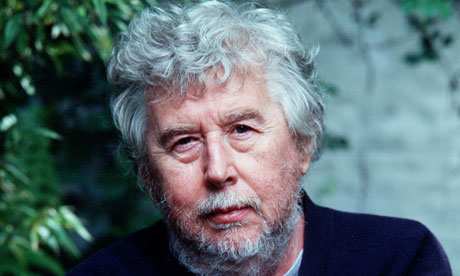
Tributes and commentary elsewhere:
- Thomas May, Memeteria, Birthday Salute to Sir Harrison Birtwistle
- Tom Service, The Guardian, Happy Birthday Sir Harrison Birtwistle! (Five Introductory Pieces)
- Tom Service, The Guardian, A Guide to Harrison Birtwistle's Music (May, 2012)
- Ethan Iverson, Do the Math, The Triumph of Time
- Fiona Maddox, The Guardian, Interview from May, 2014
Happy Birthday to Sir Harrison Birtwistle
The great British composer turns 80 today! Celebrate by listening to the May performance of Gawain that I attended, which will be broadcast at 18:30 London time. I think that is....right now, more or less.
Here's Earth Dances if you don't have 3 hours for Gawain:
Here's Earth Dances if you don't have 3 hours for Gawain:
Tokyo Symphony on Maazel
Press release from the Tokyo Symphony, more personal and touching than much of what I have seen:
Tokyo Symphony mourns passing of Maestro Lorin Maazel
The Tokyo Symphony Orchestra deeply mourns the passing of Maestro Lorin Maazel.
Maestro Maazel first conducted the Tokyo Symphony Orchestra in November 7, 1963, which was his debut in Japan. Forty-eight years later, he led the Tokyo Symphony in performances of Beethoven’s 1st symphony and Mahler’s 1stSymphony in a special concert commemorating the TSO’s 65th anniversary. This concert took place after the Great East Japan Earthquake in March, 2011, which severely damaged our home concert hall, so his appearance gave us great encouragement. TSO musicians still describe that concert performed under his baton as an unforgettable experience.
We were especially shocked by the sudden news of his passing because we had been discussing with him his return toconduct the TSO in the 2015 season.
We remember Maestro Maazel expressing his love of Japanese culture including Kabuki and Noh and Japanese cuisine. He enjoyed drinking Japanese green tea during rehearsals and backstage.
We express our sincere condolences to his family and express our gratitude for what he bequeathed us and the musical world. [please click for pdf file]
July 15, 2014
Tokyo Symphony Orchestra
Monday, July 14, 2014
Found in a Maazel Obit
From Allan Kozinn's Times obit:
In 1989, he was on a short list of candidates to succeed Herbert von Karajan at the Berlin Philharmonic. When Claudio Abbado was chosen instead, Mr. Maazel insisted that he never had any intention of leaving his Pittsburgh orchestra, and canceled his Berlin dates — not, he said, in a fit of pique, but so that Mr. Abbado would have more time to whip the orchestra into shape.Riiiiiight.
Sunday, July 13, 2014
Lorin Maazel
The eminent conductor Lorin Maazel died earlier today, age 84. I never heard him conduct in person, missing my chance when his Castleton Opera visited Cal Performances a few years ago and another when he subbed last year during the VPO's visit, so I have little personal testimony to give on him. I can say that I never made it to the end of his Tosca recording; while the casting of Nilsson, Corelli, and DFD may have sounded like a good idea at the time, it doesn't work out very well. Maazel's conducting is fine, though not in a class with De Sabata or the very different HvK.
Maazel came from a well-off family and got an early start, with music lessons of various kinds commencing at age 5, and he first stepped in front of an orchestra at 8. Every discussion of his work mentions his great technical skill and also his sometimes-eccentric interpretations.
For more, read these obits and other commentaries:
It's apparent from the Post-Gazette obit that Maazel did a tremendous job of rebuilding the PSO.
Maazel came from a well-off family and got an early start, with music lessons of various kinds commencing at age 5, and he first stepped in front of an orchestra at 8. Every discussion of his work mentions his great technical skill and also his sometimes-eccentric interpretations.
For more, read these obits and other commentaries:
- Allan Kozinn, NY Times
- Anne Midgette, Appreciation at WashPost
- Anne Midgette, WashPost obit
- Jeremy Eichler, Boston Globe
- Elizabeth Bloom, Pittsburgh Post-Gazette.
Found in Anne Midgette's obit for Maazel; exclamation points mine:
Several times in the later stages of his career, Mr. Maazel announced that he was eschewing any further music directorships to devote himself more to composing, only to have his resolution overturned by an offer he couldn’t refuse. The clearest instance of this was when the New York Philharmonic — having ditched the 73-year-old Kurt Masur because they wanted a younger conductor — came calling for Mr. Maazel, who was 71. When Mr. Maazel’s father — by then 98 and a committed New Yorker — heard that his son was taking over the Philharmonic, he said: “Now that’s a job.” (Lincoln Maazel died in 2009, at 106.) [!!]I read the NYPO's statement on Facebook (!) but cannot find it on their web site. (NYPO: consider putting a link to your Newsroom page on the NYPO home page.)
It's apparent from the Post-Gazette obit that Maazel did a tremendous job of rebuilding the PSO.
Wednesday, July 09, 2014
Foxman and Ideas
Today's NY Times has an eloquent letter from Abraham Foxman arguing that Mein Kampf, by Adolph Hitler, should be published in Germany. I agree with him on this.
However, he's the same guy who thinks you shouldn't get to see The Death of Klinghoffer. It's pretty clear from his HuffPost piece of June 20 that he and his allies pressured the Met to cancel Klinghoffer entirely.
However, he's the same guy who thinks you shouldn't get to see The Death of Klinghoffer. It's pretty clear from his HuffPost piece of June 20 that he and his allies pressured the Met to cancel Klinghoffer entirely.
Hipsters in Oakland
I worked in downtown Oakland, on Franklin St. near 19th, from mid-1990 through mid-1996. At the time, the best coffee in the neighborhood came from Cafe Pasqua on 20th and Aromas on Franklin. Pasqua eventually disappeared into the maw of Starbucks. Aromas is still there. In the 90s, the best you could do foodwise was Pho 84, on 17th. They're still there and still great; back then, I probably ate there once a week. Sure, there was Da Vinci's, still there and still offering cheese tortallini in Alfredo sauce for $9.95, and mediocre Chinese food. For a couple of years, there was a decent, not great, Indian buffet.
I wandered around the area a bit last night with my dog and my, how things are changing.
I found three fancy coffee shops in the blocks bounded by 17th, 19th, Franklin, and Harrison; two fancy bars (one in a space previously occupied by a run-down sandwich shop called Belly Roll Ben's), a whole-animal restaurant, a shop selling vintage clothes and music on vinyl, a nutrition and fitness consultancy, and a raw-food store called RAWR. Hawker Fare and Umami Burger are both a couple of blocks the other side of 19th.
These changes fall under the rubric of good/bad. Yes, it's nice to see downtown Oakland coming back. In the 90s, Emporium Capwell was on the downswing, the Fox Theater was crumbling, there was little housing and nowhere to shop or eat downtown, a number of buildings had been damaged in the '89 earthquake but never repaired or demolished, and the place was deserted after work. Now there are good places to eat, from Umami to Flora; vintage buildings have either been restored or replaced by new office towers (Pandora is in one of these); the parking lots on Telegraph across from the old Capwell building have been replaced by condos and rental apartments.
But people who've lived in Oakland for decades are being driven out by the increasingly impossible cost of housing and by gentrification; not nearly enough new housing is under development; there aren't enough jobs, still. Oakland is still a high-crime city. Gentrification is making improvements top down, but there just is not enough help for poorer citizens, the schools don't get nearly enough money (and take look at the blatantly racist and classist school districts: some straight across the wealthy, mostly-white hills, all others include the flatlands), the city is very, very poorly managed.
So, life in Oakland: a mixed bag.
I wandered around the area a bit last night with my dog and my, how things are changing.
I found three fancy coffee shops in the blocks bounded by 17th, 19th, Franklin, and Harrison; two fancy bars (one in a space previously occupied by a run-down sandwich shop called Belly Roll Ben's), a whole-animal restaurant, a shop selling vintage clothes and music on vinyl, a nutrition and fitness consultancy, and a raw-food store called RAWR. Hawker Fare and Umami Burger are both a couple of blocks the other side of 19th.
These changes fall under the rubric of good/bad. Yes, it's nice to see downtown Oakland coming back. In the 90s, Emporium Capwell was on the downswing, the Fox Theater was crumbling, there was little housing and nowhere to shop or eat downtown, a number of buildings had been damaged in the '89 earthquake but never repaired or demolished, and the place was deserted after work. Now there are good places to eat, from Umami to Flora; vintage buildings have either been restored or replaced by new office towers (Pandora is in one of these); the parking lots on Telegraph across from the old Capwell building have been replaced by condos and rental apartments.
But people who've lived in Oakland for decades are being driven out by the increasingly impossible cost of housing and by gentrification; not nearly enough new housing is under development; there aren't enough jobs, still. Oakland is still a high-crime city. Gentrification is making improvements top down, but there just is not enough help for poorer citizens, the schools don't get nearly enough money (and take look at the blatantly racist and classist school districts: some straight across the wealthy, mostly-white hills, all others include the flatlands), the city is very, very poorly managed.
So, life in Oakland: a mixed bag.
Subscribe to:
Posts (Atom)